The faults we fix most in washers and dryers
Most calls start with one of a handful of symptoms. Each one points to a short list of parts.
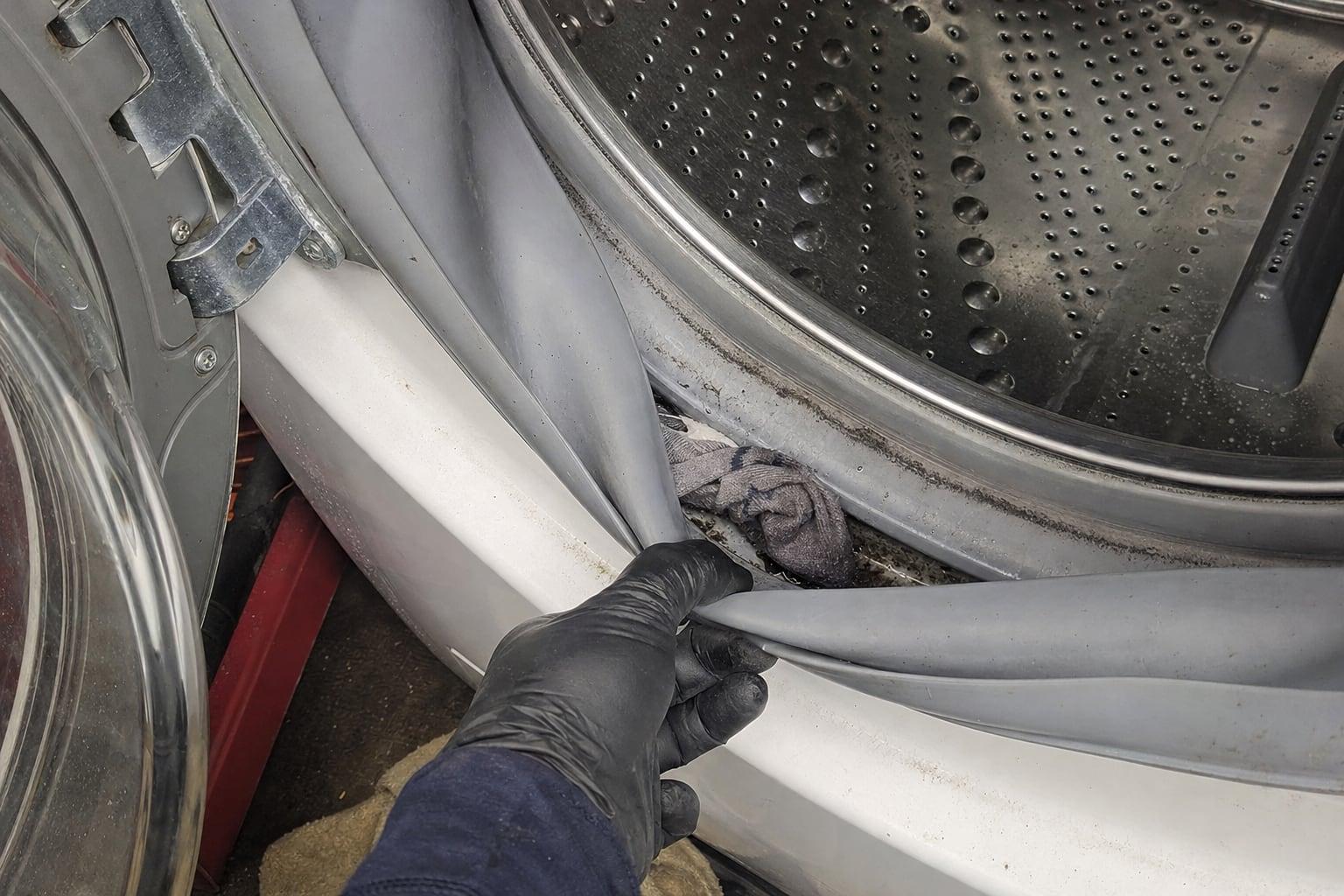
- The washer stops with water still in the drum. Usually a blocked drain pump filter or a pump that has failed. Sometimes a sock is sitting in the hose.
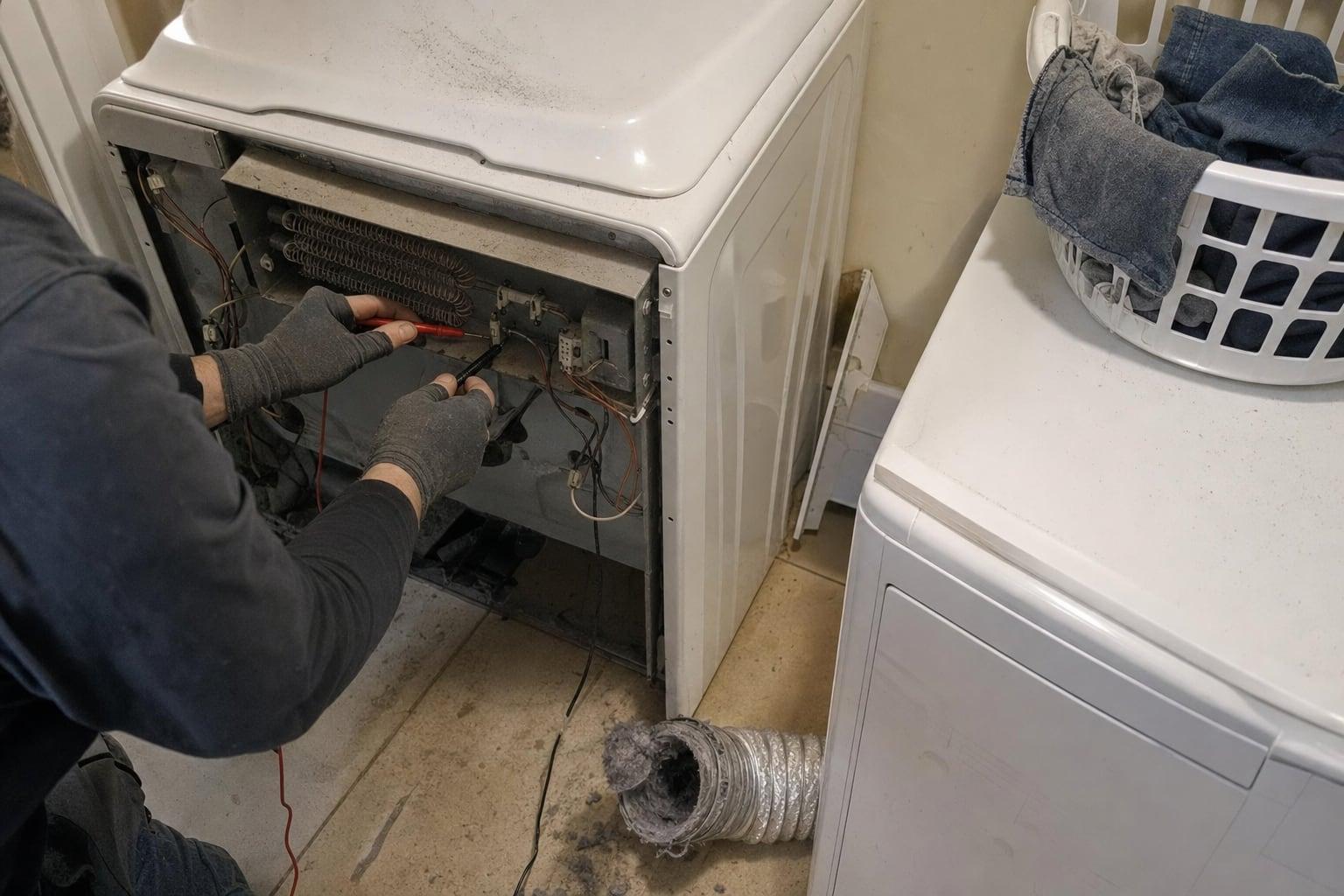
- The dryer tumbles but the clothes come out cold and damp. On an electric dryer that is often the element or a thermal fuse. On a gas dryer it is usually the igniter, the gas valve coils or the flame sensor.
- Water on the floor in front of the closet. A torn door boot on a front-loader, a loose drain hose or a supply hose that has started to weep.
- Loud banging when the washer spins. Worn shock absorbers or suspension, or a load that keeps going off balance.
- An error code that won't clear, or neither machine starts after a power cut. We read the code, test the board and sensors, and tell you what we find.
How a repair goes in a tight laundry closet
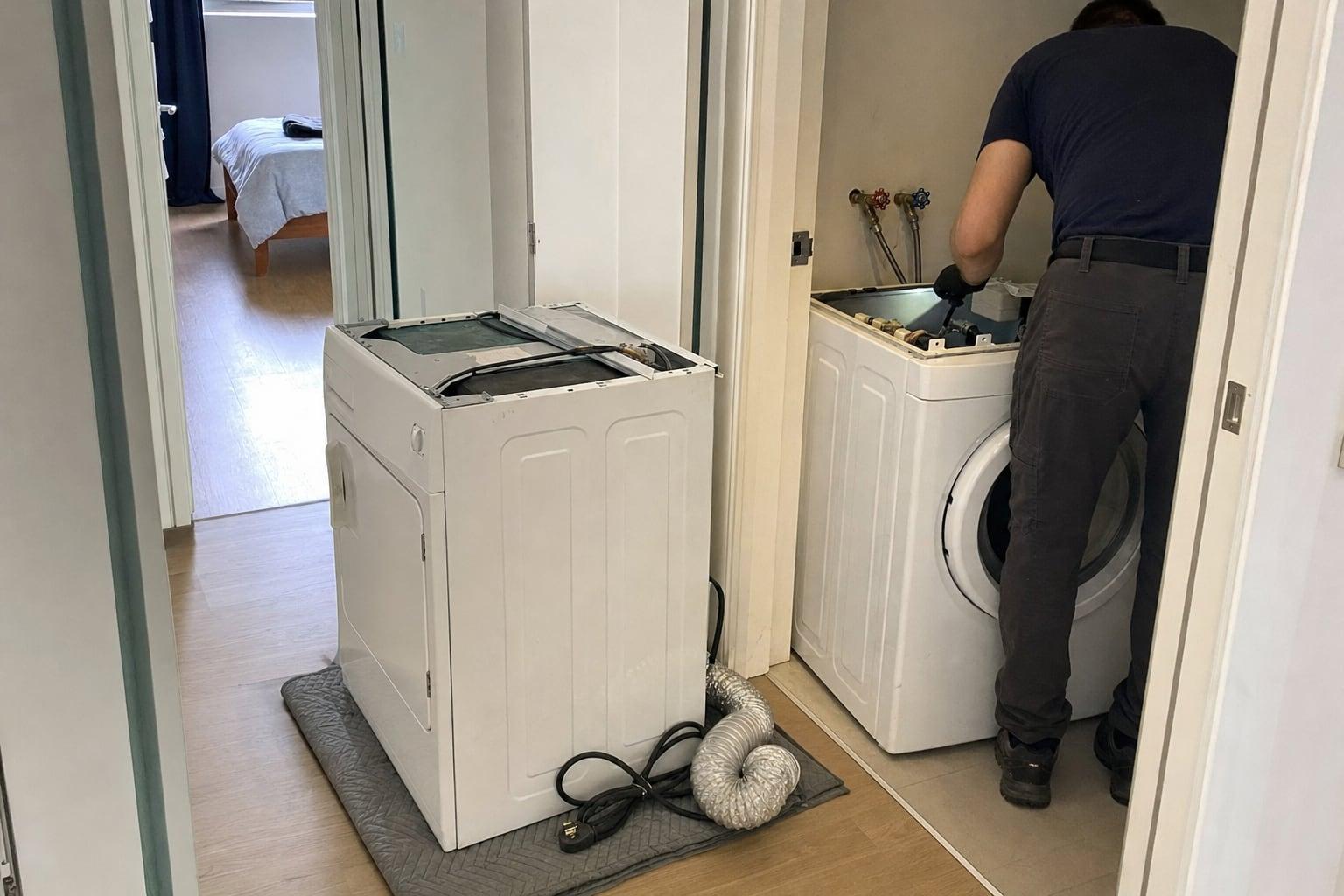
Laundry closets in condos and suites leave very little room, so the order of work matters. The technician shuts the water off at the closet valves first and lays down floor protection. Then the machine is pulled out or, on a stacked pair, the dryer is lifted off the washer with care for the trim, the door and the floor.
If both machines are misbehaving, both are checked, and you hear which fault belongs to which machine before anything is quoted. That keeps you from paying for a part on the wrong one.
When the repair is done, the stack goes back together and is set level, so the washer doesn't walk on spin. The supply hoses get a look before the technician leaves. A bulging or cracked hose is worth knowing about while someone is already in the closet.
What changes the cost and the time
We don't give a price before we have seen the machine. A dryer that won't heat can be a fuse or it can be an element, and those are different jobs. The diagnosis tells us which.
Three things move the cost and time most:
- The part. Pumps, belts, door boots, elements, igniters and sensors are common. Some are on hand and some have to be ordered, which means a second visit.
- The machine type. Stacked pairs, one-piece laundry centres, 24-inch compact machines and all-in-one washer-dryers take more care to get at than an ordinary side-by-side pair.
- The age and condition. If the drum, cabinet and motor are sound, repair is usually the better choice. If the repair is a large share of the price of a new machine, the technician will say so plainly.