What usually goes wrong on a stacked pair
The machines in a stack are ordinary washers and dryers. The difference is that one sits on top of the other inside a closet built to fit them, often with the door frame close on both sides. Here is what we see most, and the part that is usually behind it.
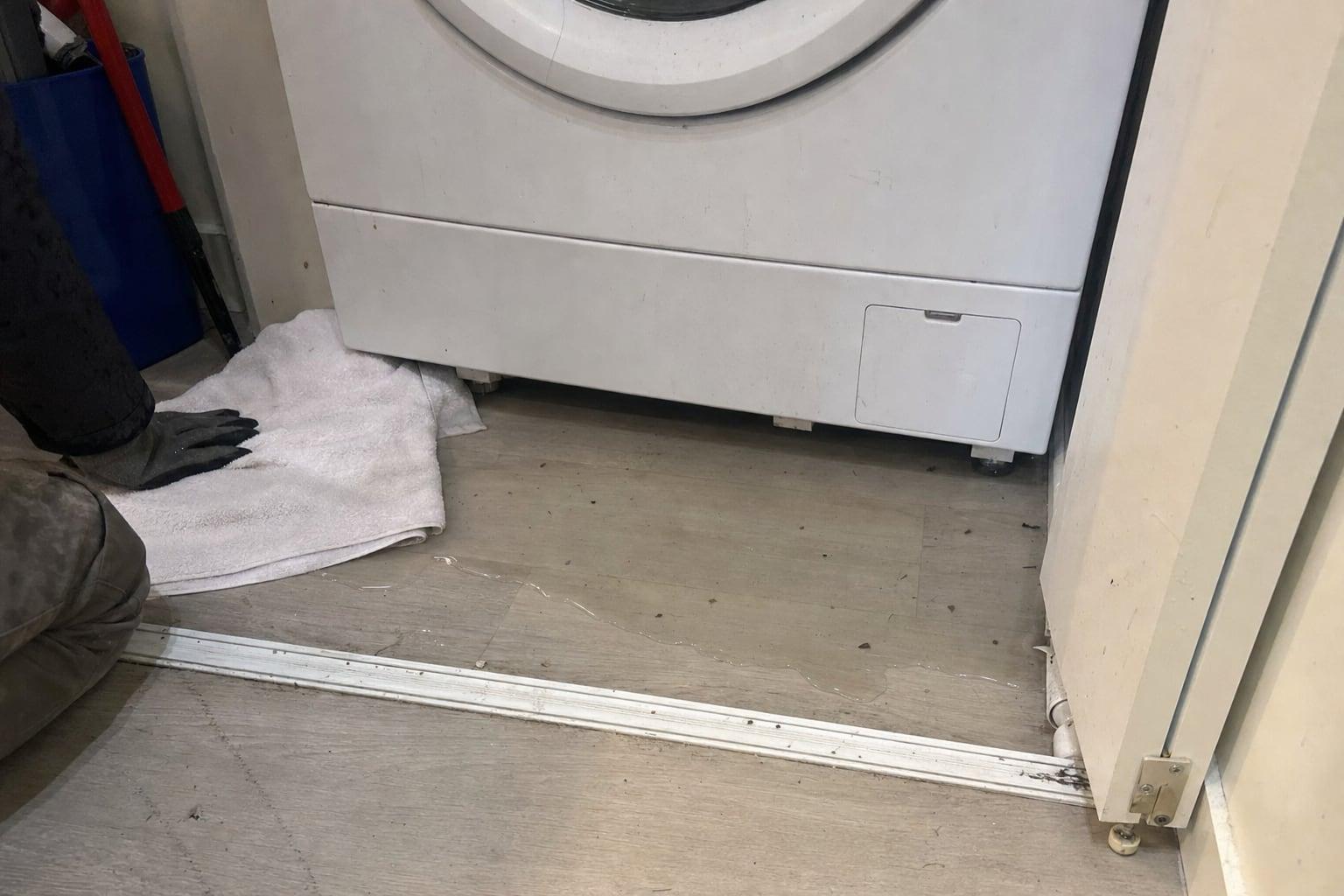
- Water at the bottom of the closet. A worn supply hose, a split door boot on a front-loader, a drain hose that has slipped, or a drain pump filter packed with lint.
- The dryer on top stopped heating. On an electric dryer, often the thermal fuse or the element. On a gas dryer, often the igniter.
- The stack shakes or walks forward on the spin. Worn shock absorbers or suspension springs, loose levelling feet, or a loose or missing stacking kit.
- The washer underneath won't drain. A blocked drain pump filter, or a pump that has failed.
- A musty smell from the closet. Usually water sitting in the door boot or a drain that runs slow.
If a neighbour below has reported a leak, turn off the two valves and hold off on the next load. That stops most leaks while you wait.
How the repair is done in a tight laundry closet
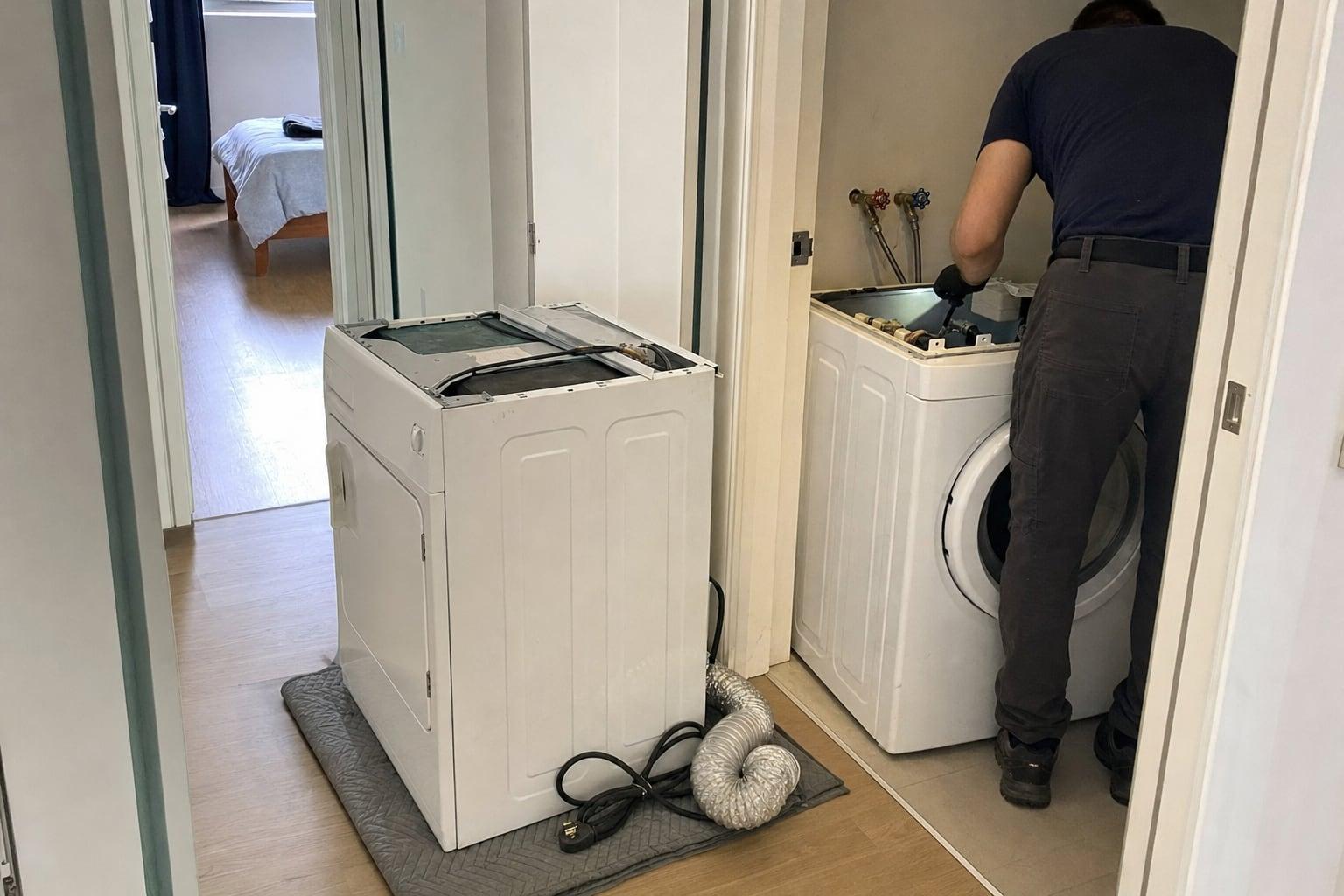
The technician shuts off the water at the closet valves first, then lays a cover over the floor and the threshold. Many repairs on a stacked pair can be reached from the front panel or through the dryer's top panel, so the stack stays together.
When the washer's top or back has to come off, the dryer is lifted off, set down somewhere protected, and stacked back level with the stacking kit once the work is done. On a one-piece laundry centre the washer and dryer share a cabinet, so more of it comes apart, but the parts are the same kinds of parts.
If both machines are acting up, both get checked while the closet is open. One closet, one call. Before leaving, the technician looks over the supply hoses, because a hose that is bulging or cracked at the fitting is often the next leak.
What affects the cost and the time
The visit carries a diagnostic fee. Once the fault is found, you get a repair quote, and nothing goes ahead until you approve it. We don't price a repair before it has been diagnosed, because a washer that won't drain might need a cleared filter or might need a new pump.
The work usually takes about an hour. It runs a little longer when the stack has to come apart, or on a laundry centre where more of the cabinet comes off. If the part needs to be ordered, the technician tells you on the spot and books the return visit once it arrives.
On an older machine, a repair doesn't always make sense. If the quote is hard to justify against the age and condition of the pair, the technician will say so plainly, and the choice stays with you.