What goes wrong on a 24-inch compact washer
Compact front-loaders are built tighter than full-size machines. The drain pump filter, door lock and sensors sit in different places, and the control reports most faults as a code on the display.
The calls we get most often:
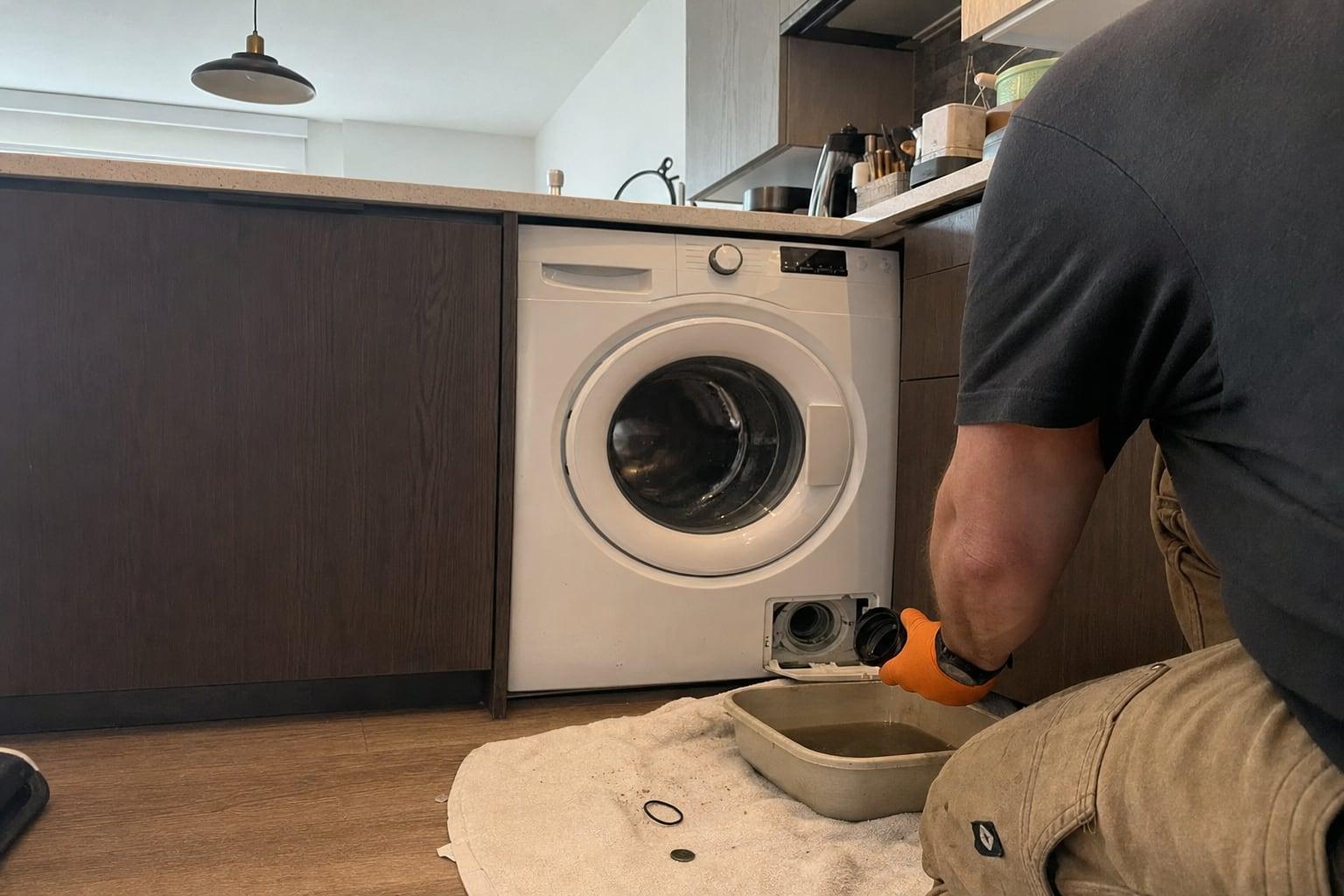
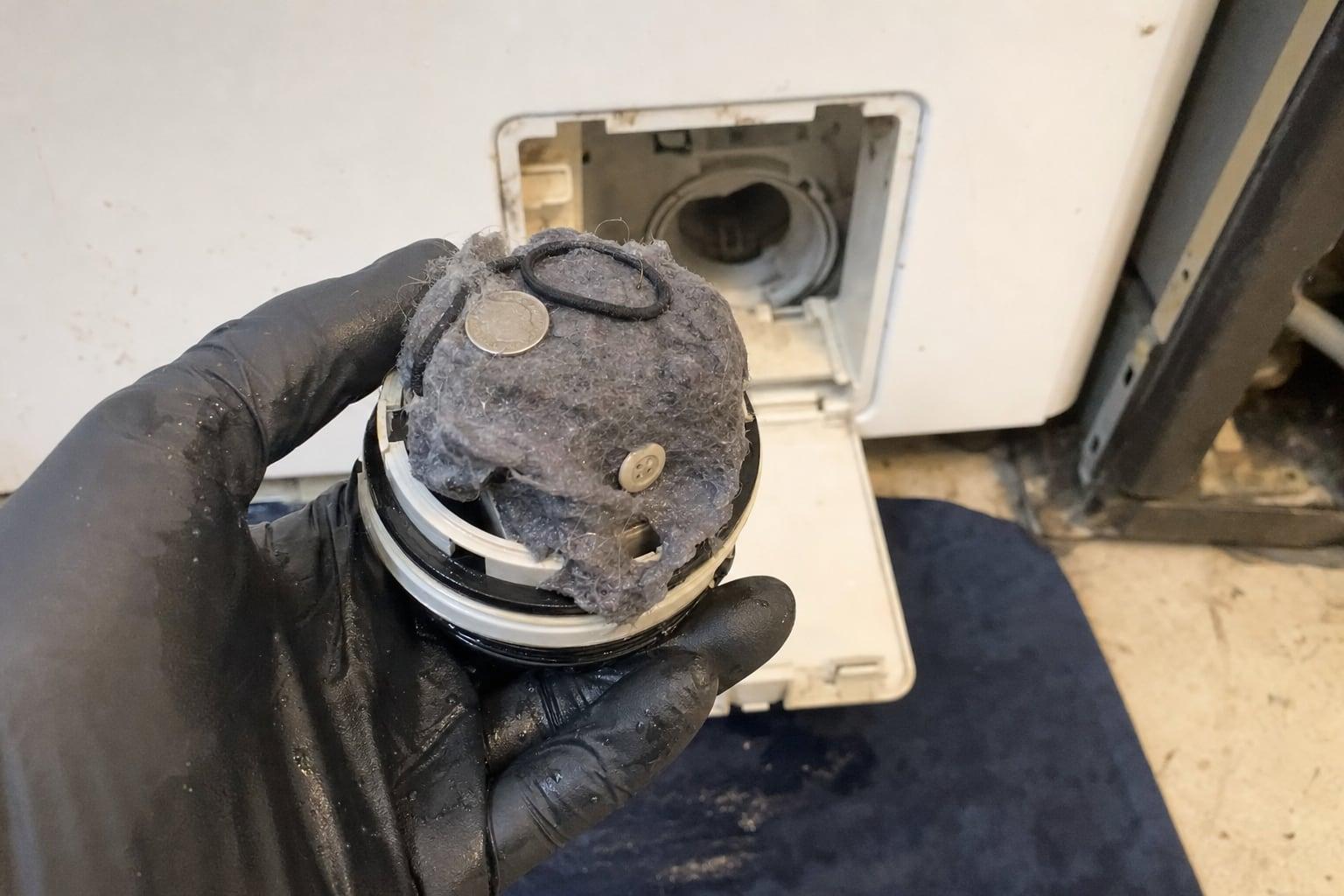
- Won't drain, door stays locked. The door won't release while water sits in the drum. The usual cause is a sock, coin, hair tie or lint in the drain pump filter behind the small flap at the bottom front.
- Water in the drum and the filter flap won't open. We bail and drain the drum onto a covered floor, then clear the filter or replace the pump.
- Stops partway through the cycle. Often a drain or water-level fault the control has flagged with a code.
- Musty or sour smell from the door seal. The door boot holds water and lint in its folds. We clean or replace the boot depending on its condition.
A code narrows the search. We still test the part before we quote it.
The matching dryer that leaves clothes damp
Most 24-inch dryers in condos are ventless, either condenser or heat pump. They don't push air through a wall, so the lint filters and the condenser have to stay clean or drying slows right down. A dryer that used to finish in one cycle and now needs two is often a blocked condenser or a clogged secondary filter, not a failed element.
When both machines are acting up, we check both on the same visit. In a closet with one washer and one dryer, the dryer complaint and the washer complaint are sometimes linked. A washer that doesn't spin out fully sends heavy, wet clothes to a dryer that can't keep up, and the dryer gets blamed.
How the visit works in a tight closet
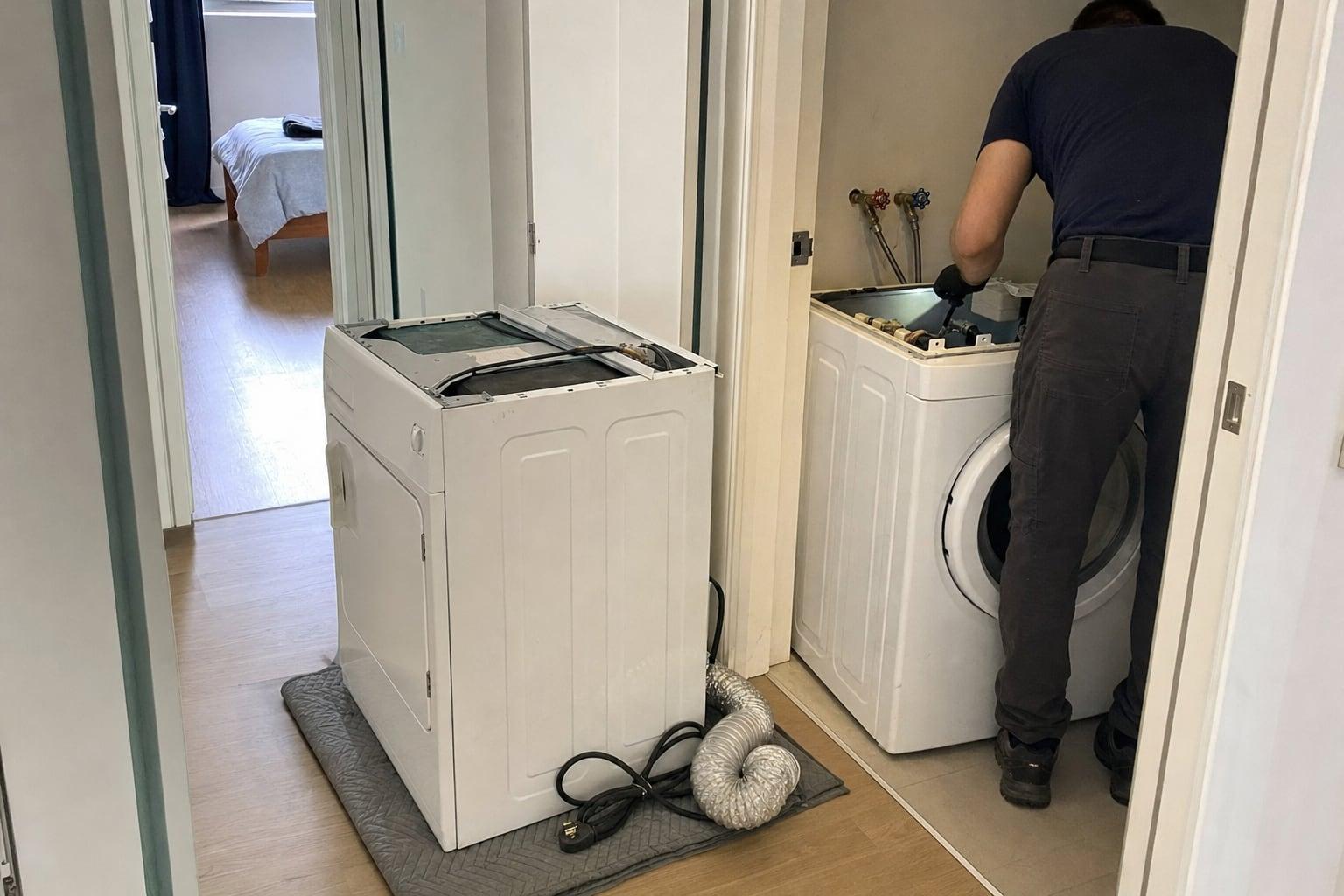
We shut the water off at the closet valves first and cover the floor. If the machines are stacked, the dryer is lifted off safely so the washer can be reached, and the pair is set back level before we leave. Under-counter machines come out without marking the trim, the door or the counter edge.
We diagnose in your closet, charge a diagnostic fee for the visit, and give you a repair quote. No parts go in until you approve it. Before we go, we look at the supply hoses and tell you if one is worn.
If the repair would cost close to what a replacement machine would, we say so. We don't sell machines, so you'll get a straight answer either way.
What affects the time and the cost
Most compact repairs take about an hour once we're at the machine. A few things change that.
- The part. Common parts like drain pumps, door boots and filters are usually easy to find. Some model-specific parts for European machines have to be ordered in, which means a second visit to fit them.
- Access. A stacked pair in a narrow closet takes longer to separate than a machine under a counter.
- More than one fault. A pump that failed because a coin got past the filter can leave other damage to check.
You'll know which of these applies before you approve anything. We don't give a price before diagnosis, because the same code can point to a filter or to a control.