Why a combo washes fine but won't dry
An all-in-one washer-dryer dries with low heat, and most newer ones use a heat pump or a condenser instead of a vent. The moisture comes out of the clothes, condenses, and leaves through the drain. When any part of that path is blocked, the clothes come out wet or the dry cycle runs for hours.
The usual causes, roughly in the order we find them:
- Lint packed into the condenser or the lint path
- A blocked drain or drain pump filter, so the condensed water can't get out
- A failed sensor that can't tell when the load is dry
- A failed heater
Load size matters too. A combo dries well only about half the load it can wash, so a full wash load often comes out damp even when nothing is broken. We check that with you before we call it a fault.
The other faults we fix on all-in-ones
Not every combo call is about drying. These are the others we see in Vancouver laundry closets:
- Water left in the drum at the end of the cycle. Usually the drain pump filter or the drain itself.
- An error code during the dry part of the cycle. Often a sensor or the heater; the code tells us where to start, not what to replace.
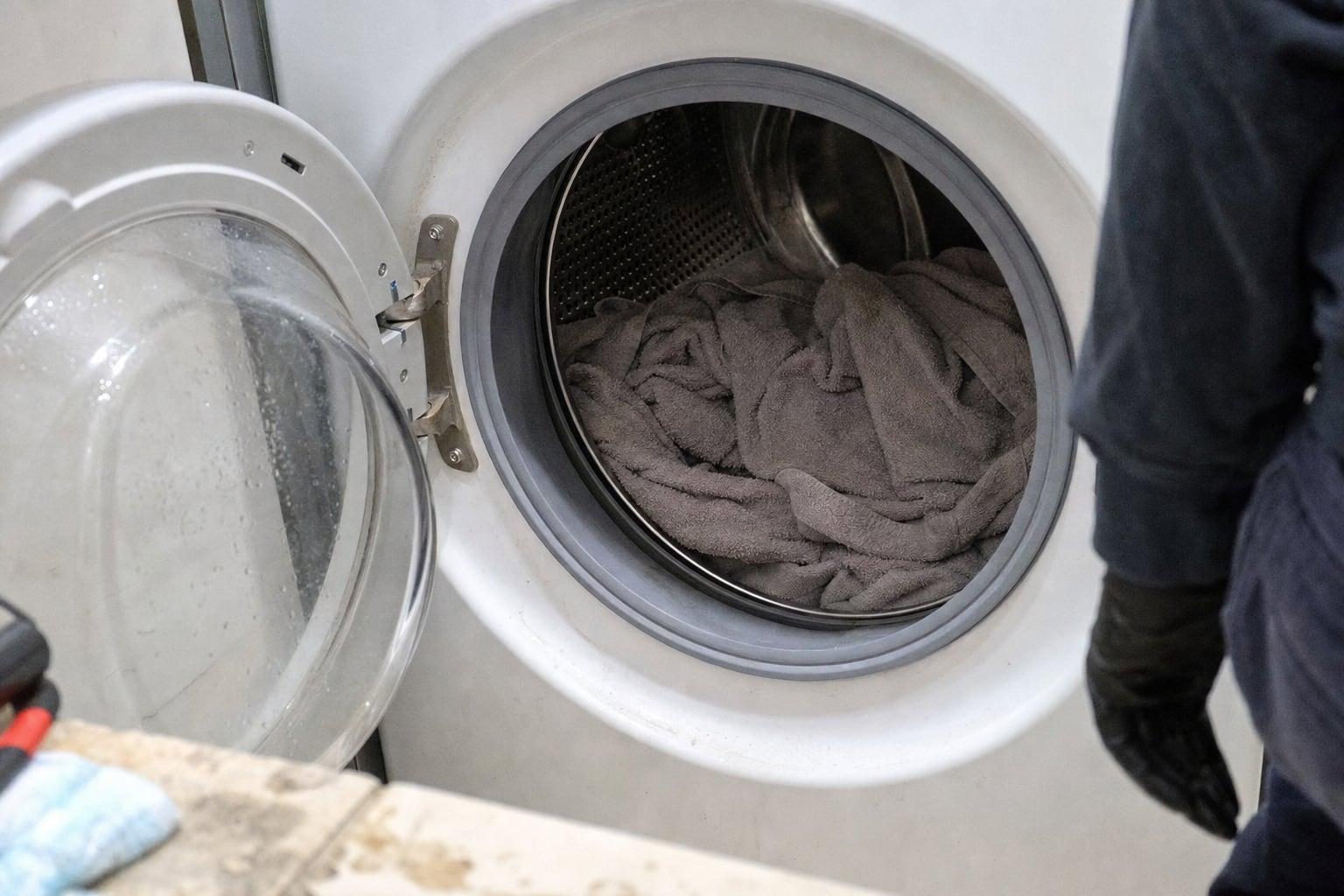
- A musty smell from the drum or the door seal. Water sitting in the seal, the drain pump filter or the condenser. A smell that keeps coming back usually points to a drain or filter problem.
- The door stays locked after the cycle. Often there is still water in the drum, so the drain is the first thing we look at.
Because the same machine does both jobs, a drain fault can look like a drying fault. We test the whole cycle rather than guess from the symptom.
How the repair goes in a small laundry closet
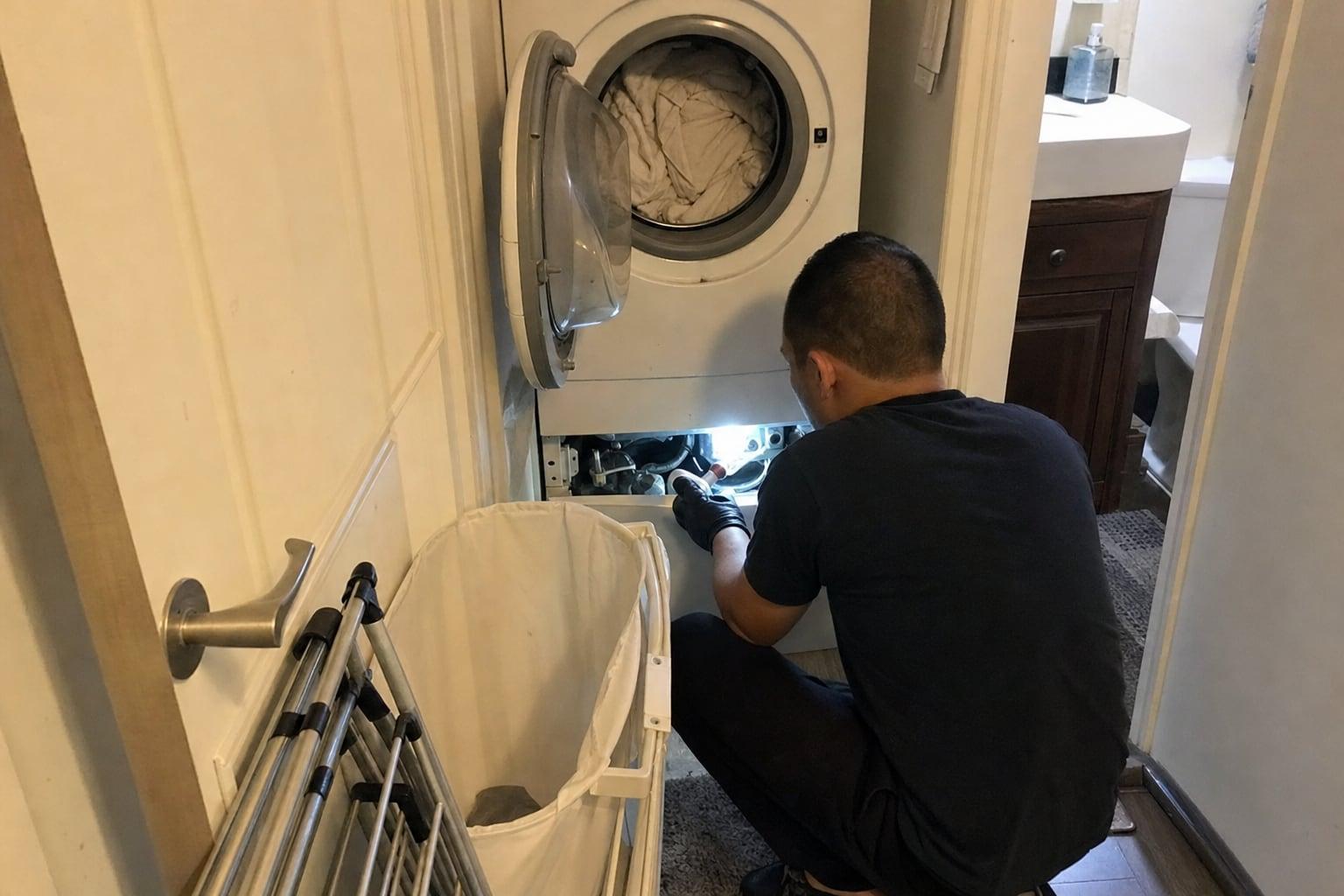
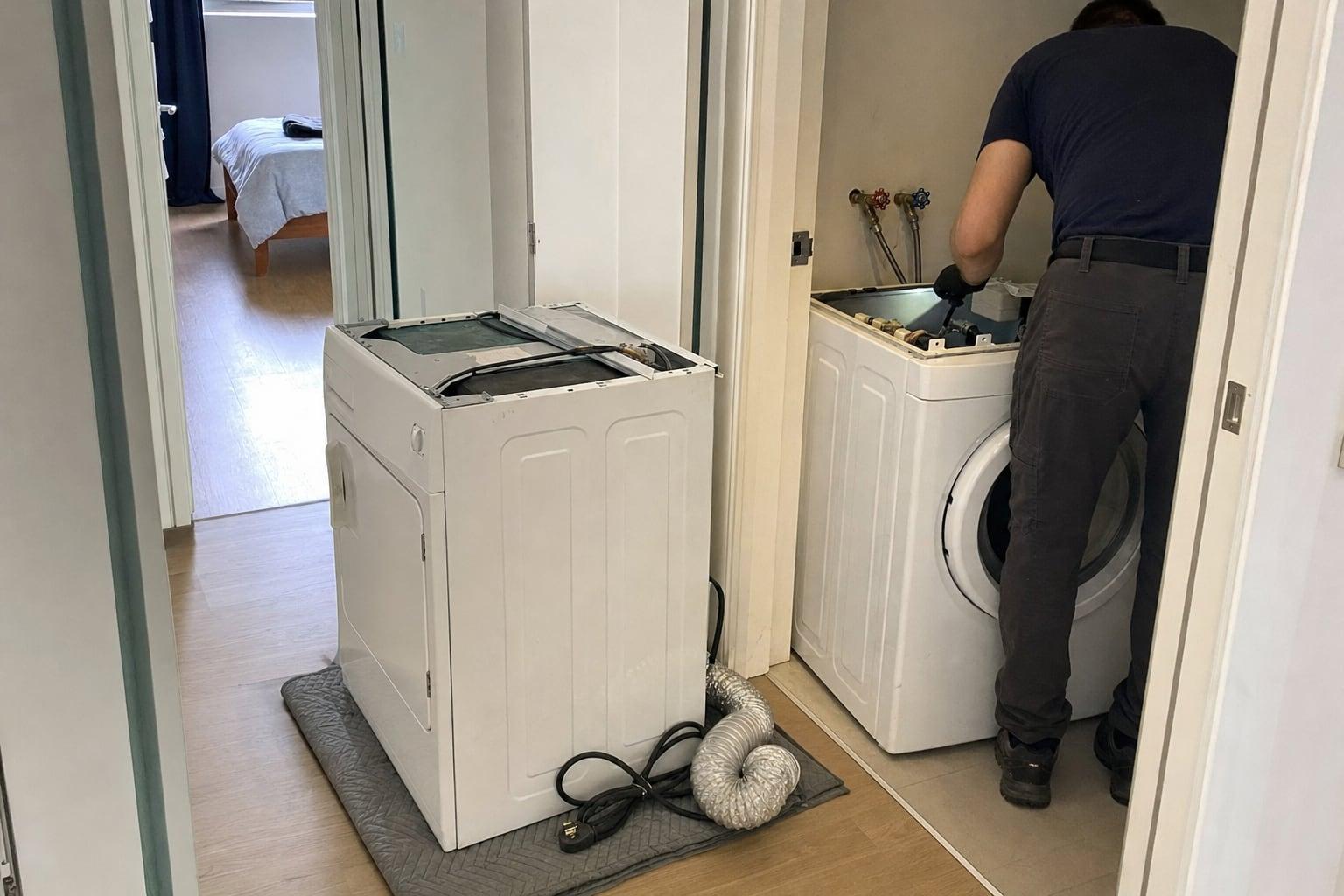
The water is shut off at the closet valves first and the floor is covered. Combos often sit in tight closets in condos, basement suites and laneway homes, so we take care with the door, the trim and the flooring when the machine has to come forward.
We run the machine, read any codes, open the drying system if we need to and find the fault. Then you get the quote. Nothing is repaired and no part is ordered until you approve it. If the part isn't on the truck, we say so and tell you what happens next.
Before we leave, we look at the supply hoses and set the machine back level. Most repairs take about an hour. A repair inside the drying system takes longer, because it has to come apart.
What changes the cost and when replacing makes more sense
The visit carries a diagnostic fee, and the repair price comes after we have found the fault. What moves it is the part, whether it has to be ordered, and how much of the machine has to come apart to reach it. A lint-packed condenser or a blocked drain pump filter is a smaller job than a failed heater deep in the drying system.
A combo is usually worth repairing when the drum, bearings and motor are sound. They cost more to replace than a single washer, and in a small suite there is often nowhere to put a second machine. When the drum or bearings have gone, we tell you plainly that replacing may make more sense, and you decide.