How a ventless dryer dries without a vent
A ventless dryer never sends its air outside. It warms the air, pushes it through the clothes, then cools it so the moisture turns back into water. That water goes into a tank you empty, usually in the top or the front panel, or down a drain hose into the washer's drain.
There are two kinds. A condenser dryer heats the air with an element and cools it to pull the water out. A heat pump dryer uses a small refrigeration system to do both jobs, so it runs cooler and uses less power, but it takes longer by design.
That is why these machines turn up in condos, basement suites and laneway homes where there is no dryer vent at all. It is also why they are fussier. Airflow and the water path have to stay clear, or the drying slows bit by bit until a load needs two cycles.
The symptoms we see and what usually causes them
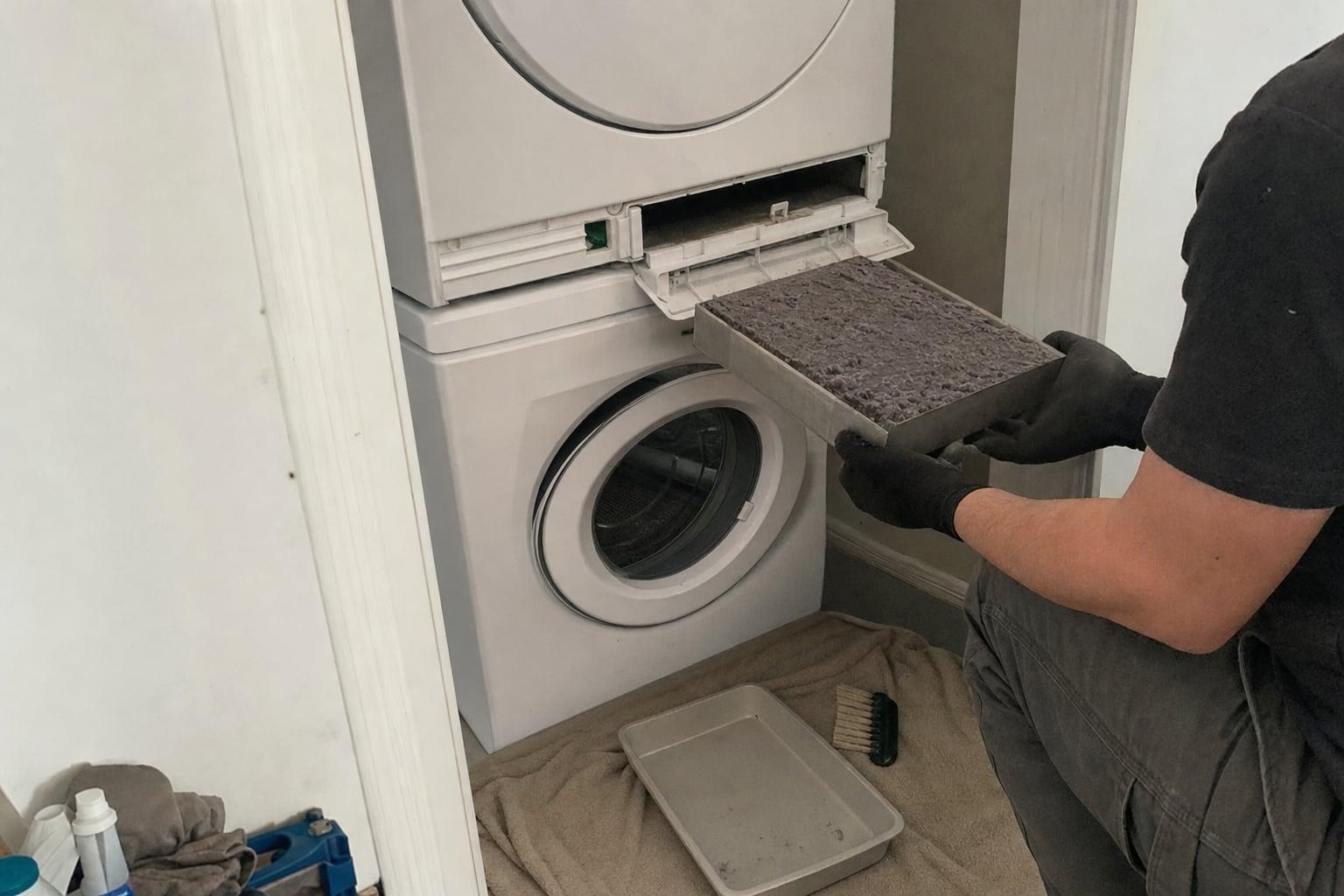
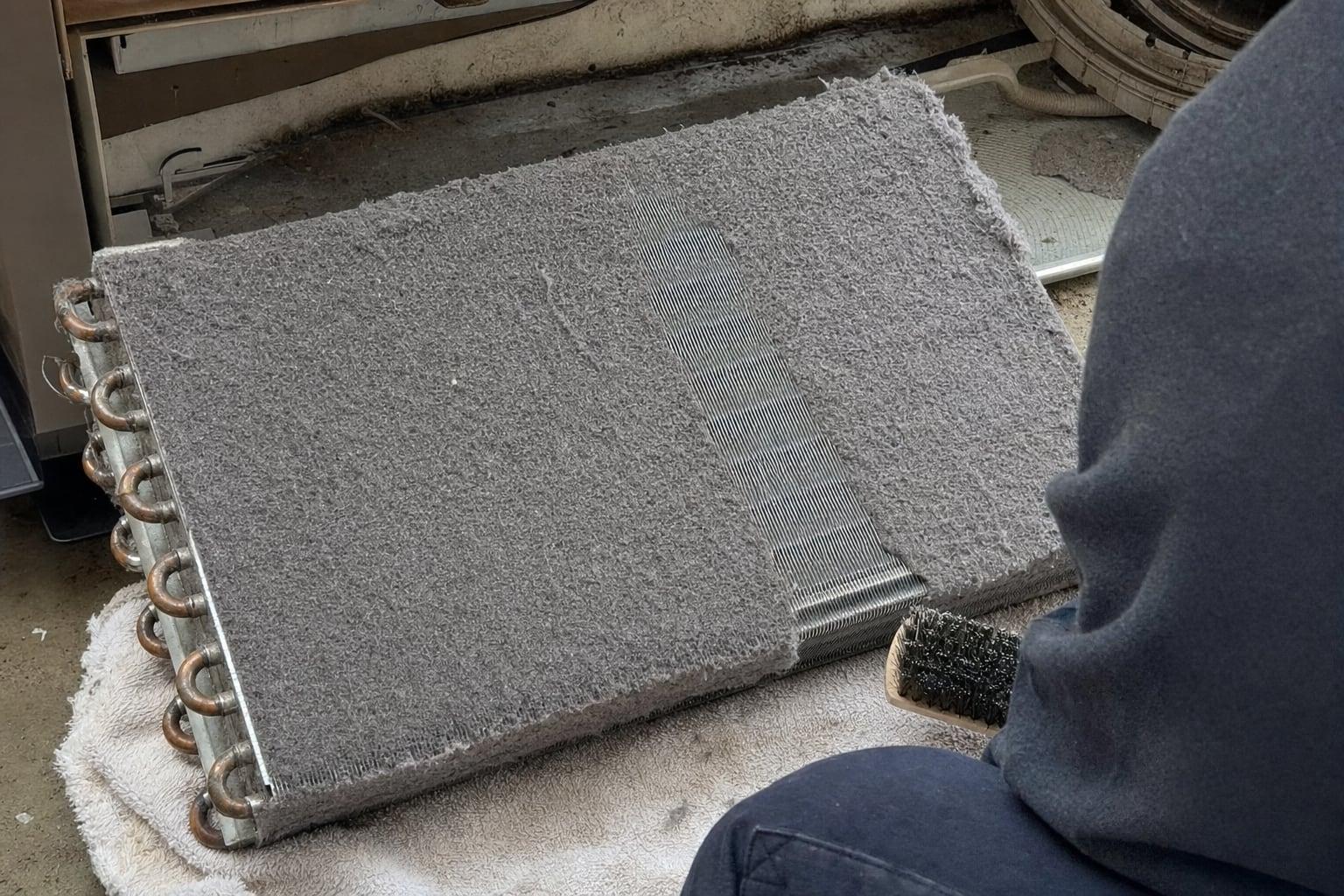
- Clothes still damp after a long cycle. Most often lint that got past the door filter and packed onto the condenser or the heat pump's coils. A packed condenser needs more than a rinse.
- The water tank light comes on after every load. The tank, its float or sensor, the pump that lifts the water, or a kinked or blocked drain hose.
- Drying takes much longer than it used to. Clogged filters, a dirty condenser, or a sensor that misreads how dry the load is.
- An error code partway through drying. Often the water path or a sensor. The code narrows it down, and testing confirms it.
- Water on the floor under the dryer. A seal, the tank, or the drain path. Usually a slow, small leak we can trace.
- The dryer runs hot and stops. Choked airflow, so the machine protects itself. On a heat pump model it can also be a heat pump part.
How the repair goes in a laundry closet
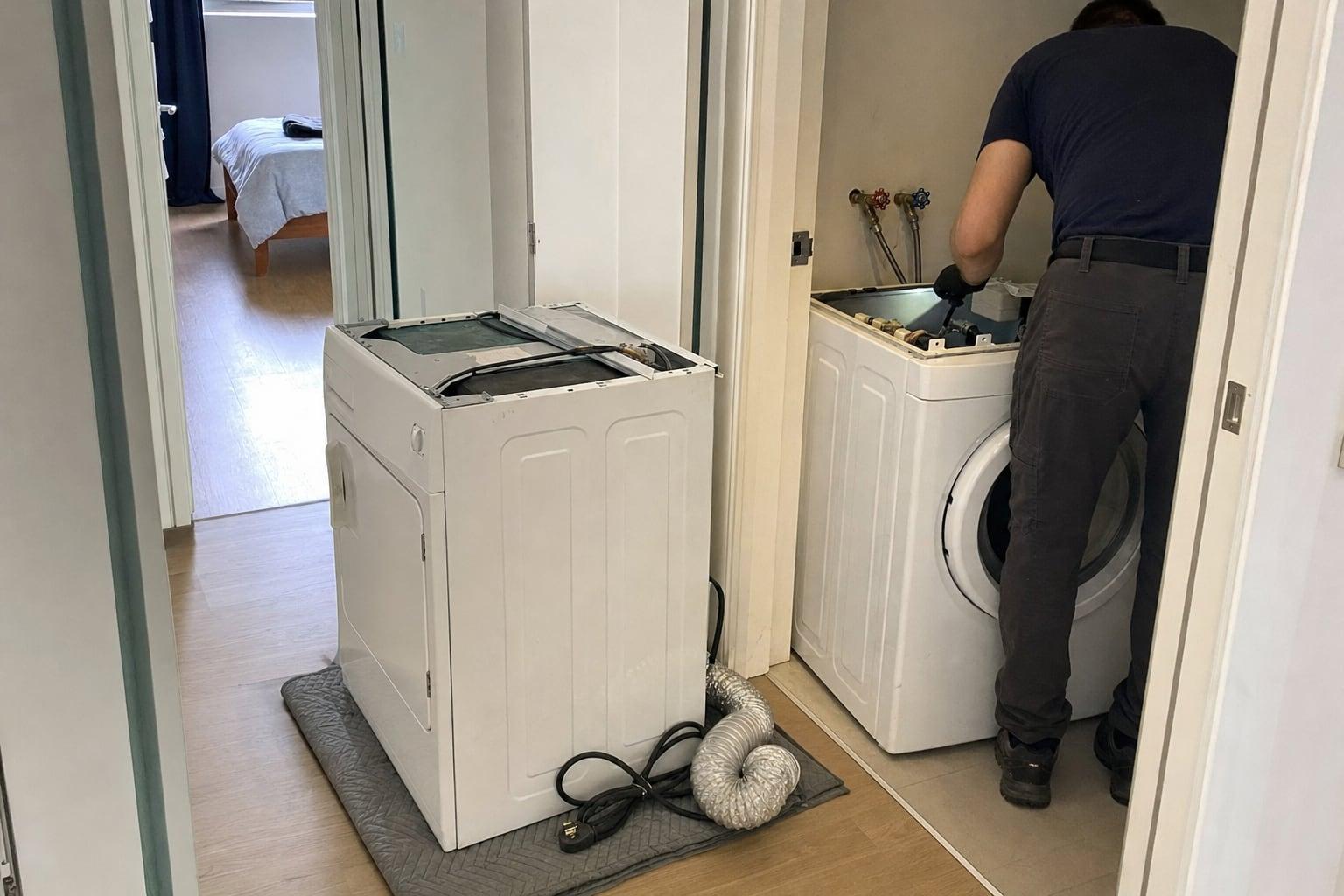
We shut the water off at the closet valves first and cover the floor. Many ventless dryers sit on top of a washer, so if we need to reach the back or the base, we lift the stack apart safely and set it back level when we are done. If the washer is acting up too, we check both machines on the same visit.
The diagnosis happens in your closet. You get a quote for the repair, and no repair goes ahead until you approve it. Filters, condensers, pumps, hoses and sensors are often a straight repair. Some parts for compact and European models have to be ordered, and we tell you that up front instead of guessing.
Before leaving, we run a test load and look at the washer's supply hoses, since they share the same closet.
What changes the cost and the time
There is a diagnostic fee for the visit, and the repair is quoted once we know what failed. We don't give a price before diagnosis, because a damp load can mean a clogged condenser or a failed heat pump part, and those are very different jobs.
Things that change the job:
- Whether the part is on hand or has to be ordered
- Whether the dryer is stacked and the pair has to come apart
- Condenser dryer or heat pump dryer, since the heat pump side takes more work
- How tight the closet is
Most repairs take about an hour. When a heat pump has failed on an older machine, we will say plainly if replacing makes more sense than repairing.