What to do first when water pools at the bottom of a stacked laundry closet
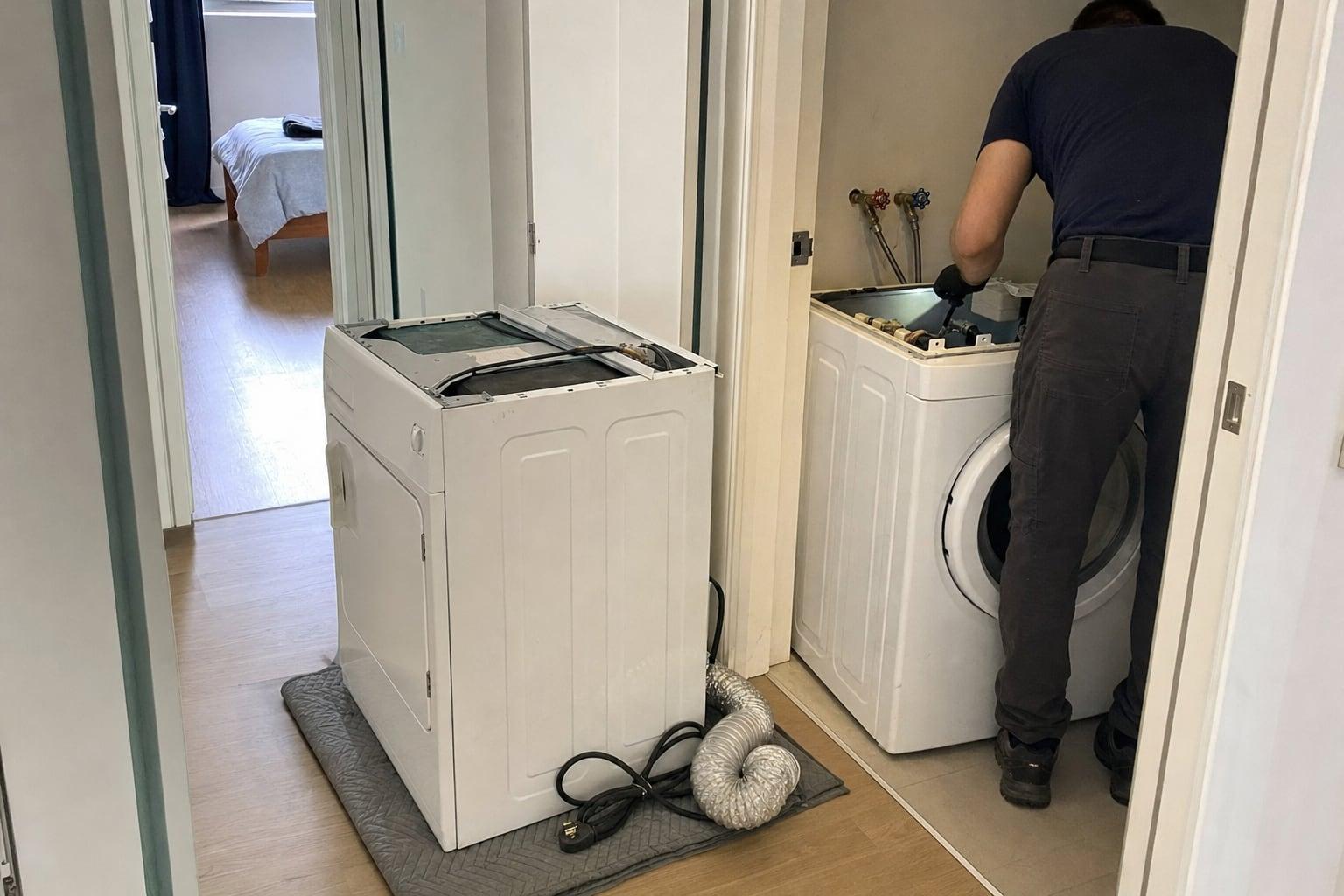
Turn the water off at the closet valves, stop the washer and soak up what is on the floor. Then look at where the water sits. At the back usually means a supply hose or the drain hose. At the front usually means the door boot or the drain pump filter. If a neighbour below has called, tell them and your strata what you have done. Most of these are routine repairs.
Start at the closet valves
Most stacked pairs in Vancouver condos sit in a hallway closet with two small valves on the wall behind or beside the washer. One is hot, one is cold. Turn both clockwise until they stop.
That takes the pressure off the supply hoses, which are the first thing to rule out.
Then stop the washer. If it is mid-cycle and full of water, leave the door shut. Opening a front-loader with water in the drum puts that water on your floor.
Put towels along the front of the closet and across the threshold. Laminate and hardwood in older Kitsilano and Mount Pleasant buildings swell when water sits on the seams overnight.
Where the water sits tells you a lot
Before you wipe it all up, look at where the puddle is deepest. It is the best clue you will get.
Water at the back of the closet
- A supply hose that has cracked, bulged or loosened at the valve or at the back of the washer
- The drain hose slipping out of the standpipe during the pump-out
- A standpipe that backs up when the washer drains fast
- A split in the drain hose near the clamp
Water at the front, under the door
- The door boot, the rubber seal around the washer door, with a tear or a sock caught in a fold
- The drain pump filter cap not fully tightened after it was last cleaned
- Too much detergent, so suds push out past the seal
Water that seems to come from above
A vented dryer on top doesn't use water, so it is almost never the source. Water that looks like it is coming from up high is usually running down the back of the stack from a hose or a valve.
Things you can check yourself
With the valves off and the floor covered, these are safe to look at:
- Run your hand along each supply hose you can reach. Feel for wet spots, a bulge or a loose fitting.
- Pull back the folds of the door boot and check for a tear, a coin or a small piece of clothing.
- Find the drain pump filter, usually behind a small panel at the bottom front of the washer. Put a shallow tray and towels down first, because water comes out when you open it.
- Check that the drain hose is still hooked into the standpipe.
Getting at the back of a stack is the hard part. In most closets you can't pull the pair out without lifting the dryer off first, and that is a two-person job with the stacking kit taken apart. Don't try to walk a stack forward on your own. It can tip, and it will scrape the floor and trim on the way out.
If the suite below has called
In a strata building, a leak can reach the next suite before you see much on your own floor. That call from downstairs is common, and it doesn't always mean a lot of water.
Let your neighbour know the water is off. Let your strata or building manager know as well. Many buildings want to hear about it and want the machine looked at promptly.
Strata bylaws in many towers also mean booking the elevator and protecting floors before a technician comes up. It helps to sort that out when you book, not on the day.
In a basement or laneway suite in Marpole or Renfrew-Collingwood, the closet is often the only place to do laundry at all. Get the water off, get the floor dry, and don't run another load until you know where it came from.
Why it shows up more at this time of year
Most of Vancouver's rain falls from October to April. Nothing dries on a balcony, so the washer runs more loads and fuller ones. Hoses and seals that were fine in summer get a lot more work, and small weeps turn into puddles.
What the repair usually involves
On a stack, the work is the same as on a side-by-side pair. The access isn't.
We shut the water off at the closet valves, cover the floor, and find the source. If the dryer has to come off the washer, it is lifted off, set down safely and stacked back level with the kit. Most visits take about an hour, a little longer when the stack has to come apart. The supply hoses get looked at before we leave, even when they weren't the cause.
When it makes sense to call a professional
If the valves are off and you found a loose filter cap or a sock in the door boot, you may not need anyone. If the water comes back, if the puddle is at the back where you can't reach, or if the suite below is still seeing water, call a technician who works on stacked pairs. Nothing gets replaced until you approve the quote.
Book a repair
The machine, what it’s doing and any code on the display. We call back to set a time. Rather talk? Call 778-743-7959.